
In this article
- Introduction
- Key Numbers: Dubai and UAE Property Tokenization in 2026
- What property tokenization actually means in Dubai in 2026
- Who regulates what: the five UAE regulators plus DLD
- The VARA ARVA route: what a Category 1 issuance requires
- Title deed tokens or SPV wrapper: choosing the structure
- The onshore layer sponsors underestimate
- Liquidity is not distribution: designing the secondary market
- Execution timeline: mandate to market
- Beyond Dubai: Abu Dhabi, the northern emirates and cross-border
- Frequently Asked Questions
Introduction
Dubai property tokenization crossed from experiment to operating market in February 2026, and most sponsors are still structuring for the market that existed before it. The Dubai Land Department (DLD) projects tokenized assets will reach AED 60 billion by 2033, around 7 percent of all Dubai real estate transactions. That target is not reached by more pilots. It is reached by asset owners who can get a structure licensed, funded and traded without discovering in month seven that their token is a security, their valuation is not admissible, or their exit has no buyers. At RWA Labs we advised 150+ asset owners on tokenization mandates in the twelve months to July 2026, and the failure points repeat. This guide sets out both halves of the job: the legal perimeter across the five UAE regulators plus DLD, and the execution sequence that actually gets a property token to market.
Sitting on an asset and unsure whether it can be tokenized? Book a free call with RWALabs. We map the structure, the regulator and the realistic timeline before you spend anything.
Key Numbers: Dubai and UAE Property Tokenization in 2026
- AED 60 billion projected tokenized real estate market value by 2033, around 7 percent of Dubai transactions (DLD).
- AED 18.5 million invested during the DLD pilot, May 2025 to February 2026, from 50+ nationalities.
- 7.8 million property tokens became tradable when secondary trading opened on 20 February 2026.
- One pilot listing fully funded in 1 minute 58 seconds, against a waitlist of more than 10,700.
- AED 1.5 million minimum paid-up capital, or 2 percent of average reserves, for a VARA Category 1 ARVA issuer.
- AED 2,000 minimum ticket and a 20 percent per-investor ownership cap in the DLD model.
- 150+ asset owners advised by RWA Labs on tokenization mandates in the twelve months to July 2026.
- 100+ licensed VASPs now operating across the UAE's five regulators.
What property tokenization actually means in Dubai in 2026
Property tokenization in Dubai means one of two legally distinct things, and confusing them is the single most common structuring error we see. In the first model, the token is issued against the title deed itself, with the investor's fractional ownership recorded in the DLD registry. In the second, a special purpose vehicle owns the property and the token represents an interest in the SPV, which is how every crowdfunding and fractional platform in the market worked before 2025.
The distinction is not cosmetic. It changes which regulator has jurisdiction, what the investor owns in an insolvency, how a sale is approved, and how quickly an exit clears. In the DLD model, the land registry tokenizes the title deed and the platform distributes the resulting fractions according to each investor's contribution. Sponsors then typically mint a parallel VARA-regulated token carrying the ancillary rights: rental yield, property management terms, platform terms and conditions, and the hooks for later features such as collateralization. Under the SPV model, the property is owned by the vehicle, not the investors, and every ownership change is an administrative act on the SPV rather than a registry entry. That is why legacy fractional platforms could only offer exit windows twice a year.
For the sponsor, the practical test is what you are actually selling. If you are selling registered ownership of Dubai real estate, the onshore route through DLD is the shorter path and the stronger investor proposition. If you are selling economic exposure to a portfolio, a pooled income stream or a development pipeline, you are almost certainly building a fund or a security, and you belong in a different regulatory conversation entirely.
Not sure which of the two models your asset fits? Talk to RWALabs before you commission a whitepaper.
Who regulates what: the five UAE regulators plus DLD
Six authorities can touch a UAE property token, and only one of them regulates real estate. Sponsors routinely secure the virtual asset permission and then stall on the property law layer, which is onshore, emirate-specific, and indifferent to how good the token design is.
| Authority | Jurisdiction | Relevance to property tokenization |
|---|---|---|
| DLD | Dubai, onshore real estate | Title registration, tokenized title deeds, valuation admissibility, Form F and transfer mechanics |
| VARA | Dubai (mainland and free zones, excluding DIFC) | Category 1 ARVA issuance, broker-dealer and exchange permissions for property tokens |
| CMA (federal) | UAE-wide | Security tokens and tokenized financial instruments under Resolution No. 15/Chairman of 2025; federal broker and exchange licensing |
| CBUAE | UAE-wide | Payment tokens, dirham settlement rails, banking and client money arrangements |
| ADGM / FSRA | Abu Dhabi Global Market | Holding structures, fund vehicles, institutional-grade issuance under common law |
| DIFC / DFSA | Dubai International Financial Centre | SPV and fund structures, tokenized financial instruments under the DFSA regime |
Two federal developments moved the perimeter in 2026. The Capital Markets Authority was reconstituted from the Securities and Commodities Authority on 1 January 2026 under Federal Decree-Laws No. 32 and No. 33 of 2025, and VARA's Guidance on Virtual Asset Issuance of 9 April 2026 stated for the first time that a tokenized real-world asset which qualifies as a financial instrument may be regulated as a security at federal level regardless of any Dubai approval. A token that mimics shares, bonds or fund units is a CMA matter. A token that conveys direct fractional ownership of a specific registered property is not.
The VARA ARVA route: what a Category 1 issuance requires
A Dubai property token is almost always an Asset-Referenced Virtual Asset, and an ARVA is a Category 1 issuance requiring a VARA licence, a VARA-approved whitepaper and compliance with the full compulsory rulebook suite. VARA introduced the ARVA category in May 2025, and the DLD pilot was the operational foundation for it.
The core requirements a sponsor should budget for:
- Capital. Minimum paid-up capital of AED 1.5 million or 2 percent of the average market value of reserve assets over 24 months, whichever is higher, plus net liquid assets of at least 1.2 times monthly operating expenses.
- Per-issuance approval. Every individual ARVA requires standalone VARA approval before issuance. A licence is not a standing permission to keep minting.
- Whitepaper and risk disclosure. Mandatory before any public sale or marketing. The April 2026 Guidance requires material, ranked risks and prohibits generic boilerplate disclaimers.
- Legal opinions. The Guidance introduced a five-part legal opinion framework that every ARVA issuer must complete before launch. This is a distinct workstream, not a paragraph in the whitepaper.
- Reserve assets, but only sometimes. This is the distinction most sponsors get wrong.
VARA now separates stable-value ARVAs, which hold a peg to an underlying asset and carry the full reserve regime, from direct-ownership ARVAs, where ownership of the asset transfers with the token and reserve requirements do not apply because the holder already owns the asset. A tokenized Dubai title deed sits in the second category. Misclassifying it into the first adds a reserve regime, a custodian and a capital charge the structure never needed.
Across the mandates RWA Labs advised in the twelve months to July 2026, this classification call was the single largest driver of budget variance. Sponsors who settled it before drafting the whitepaper priced their capital, custody and reserve arrangements once. Sponsors who settled it after the first regulator comment letter repriced the whole structure and lost a quarter doing it.
The licensing and opinion work on ARVA issuances is legal work, and it should be run by counsel who has done it before. RWALabs.ae works with NeosLegal on the regulatory and legal side of RWA tokenization mandates: VARA ARVA classification, whitepaper and risk disclosure drafting, the five-part opinion set, and CMA perimeter analysis. NeosLegal has structured 300+ Web3 and virtual asset projects since 2016 across all five UAE regulators, issued 250+ token legal opinions with a 100 percent acceptance rate at Tier-1 exchanges, and recorded zero client enforcement actions. Their full breakdown of the UAE framework is in the NeosLegal RWA tokenization guide.
Need the licensing pathway priced and sequenced? Book a strategy call with NeosLegal for the legal perimeter, and book a free call with RWA Labs for the structuring and go-to-market.
Title deed tokens or SPV wrapper: choosing the structure
Choose the title deed route when you are selling ownership of a single registered Dubai property to retail investors, and the SPV or fund route when you are selling exposure to a pool, a development, or an asset that sits outside Dubai's registry. Both are legitimate. They serve different assets and different buyers.
| Feature | Tokenized title deed (DLD model) | SPV wrapper | Legacy crowdfunding |
|---|---|---|---|
| What the investor owns | Registered fractional ownership, name on the title deed | Shares or units in the vehicle that owns the property | Contractual interest in a pooled vehicle |
| Registry position | Recorded at DLD | Property held by SPV, investors held at vehicle level | Property held by vehicle |
| Typical vehicle domicile | None required for the ownership layer | DIFC, ADGM or applicable free zone | DIFC or free zone |
| Regulator for the token | VARA ARVA, plus DLD onshore | VARA or DFSA/FSRA, CMA if a security | Crowdfunding or fund regime |
| Secondary transfer | Registry-linked, secondary trading live since 20 February 2026 | Administrative change to the vehicle | Historically fixed exit windows only |
| Best fit | Single, ready, income-producing Dubai property | Portfolios, development assets, institutional raises | Retail pooled products |
Two practical constraints in the DLD model shape the product. No single investor may hold more than 20 percent of a tokenized property, which is deliberate: it keeps ownership distributed and prevents one holder from controlling a disposal. And disposal itself is governed by a defined hold period, after which holders vote on a sale with voting weight proportional to ownership. Real estate is a five-year asset, and the structure says so out loud rather than pretending otherwise.
The assets that clear fastest are ready, tenanted residential units. Income starts on day one, the valuation framework is settled, and the diligence is standard. Off-plan, commercial and mixed-use assets are all tokenizable, but each adds a layer to the legal and valuation work.
The onshore layer sponsors underestimate
The binding constraint on a UAE property token is usually onshore property law, not virtual asset regulation. You can hold the best virtual asset authorization in the world and still fail because the emirate's real estate legislation does not support what your token does. Real estate is an onshore legal construct. The token is a free zone or federally regulated instrument. Both have to work.
The onshore checklist that decides whether a mandate is viable:
- Title and encumbrances. Clean title, no mortgage or caveat that blocks fractionalization, and confirmed eligibility of the owner to transact.
- Foreign ownership. Whether the property sits in a designated freehold area determines who can hold the tokens at all.
- Valuation. Valuation in Dubai is a separately regulated activity. The number must come from a valuer registered to provide it, not from the sponsor's own model, and for larger assets the valuation is the document the entire raise rests on.
- Transfer documentation. The DLD process still runs on its own paperwork. In the DLD-partnered model, a listing is documented with a memorandum of understanding or Form F setting out sale terms, including symmetrical liability if either side walks: the standard position is 10 percent of property value payable by whichever party fails to complete.
- Investor eligibility. The pilot ran with DLD-integrated eligibility checks on top of standard KYC, and access has so far been limited to holders of a valid Emirates ID, with international access sequenced for a later phase.
- Property management. Rent collection, maintenance and tenant management are typically outsourced to a third-party manager, both operationally and to remove the conflict of a sponsor managing an asset it also sells.
One more onshore reality: the DLD model settles in dirhams. The pilot ran on fiat only, through segregated client money accounts, with no cryptocurrency accepted at the point of investment. Sponsors designing a crypto-native funnel need to plan for a fiat settlement layer and a banking partner that will hold client money.
Working through onshore diligence on a specific building? Send us the asset and we will tell you in one call whether it is tokenizable as it stands.
Liquidity is not distribution: designing the secondary market
Enabling a secondary market gives you distribution, not liquidity, and the two are constantly confused. Dubai solved the structural layer on 20 February 2026, when roughly 7.8 million property tokens became tradable 24 hours a day through a regulated in-app marketplace, with sellers able to list within a defined band around the current valuation. That is a genuine achievement: transfer without an agent, a trustee or a six-month wait. It is not the same as a deep market.
Liquidity has three layers, and sponsors need all three.
- Structure. The legal and technical ability to transfer a token in real time. Crowdfunding structures never had this. Tokenized structures do, natively.
- Distribution. Enough eligible buyers connected to the asset. This is the layer sponsors skip.
- Depth. Enough capital willing to sit in that specific structure waiting for a seller.
The arithmetic is unforgiving. The maximum liquidity that can ever exist inside a tokenized AED 2 million apartment is AED 2 million, and the pool of buyers interested in that specific unit is small. Depth arrives with asset size and buyer sophistication: an institutional-scale asset attracts market makers, funds and qualified investors who will hold inventory. This is the strongest argument for tokenizing larger commercial assets rather than more apartments.
Design options worth pricing at structuring stage rather than after launch:
- Principal dealing. Under VARA's rulebooks a platform can facilitate secondary trades on its own book, taking on inventory risk, usually funded by a credit line.
- Third-party market makers. From a structural standpoint, an external liquidity provider is simply another buyer sitting at the bottom of the book.
- A liquidity backstop. A defined option to exit at a modest discount when peer-to-peer matching fails.
- Chain strategy. The DLD implementation runs on the XRP Ledger, chosen for cost and settlement reliability. Longer term, connecting tokenized property to other chains and to crypto-native capital is what turns distribution into depth, so build the token so that this is a configuration change rather than a re-issuance.
The demand signal is real. Tribe co-founder Sebastian Agren noted on the Blockcast podcast that around 75 percent of Dubai residents do not own property in Dubai. The DLD pilot's 10,700-strong waitlist and sub-two-minute sell-out point the same way. The constraint has never been buyers. It has been supply of properly structured product.
Execution timeline: mandate to market
A well-prepared Dubai property tokenization runs roughly six to nine months from mandate to first token issued, and a poorly prepared one runs past twelve. The variable is almost never the technology. It is document readiness, classification decisions taken late, and a distribution plan that starts after the structure is built instead of before it.
| Phase | Typical duration | What it involves |
|---|---|---|
| Feasibility and perimeter mapping | 2 to 3 weeks | Asset diligence, ARVA versus security classification, regulator selection, cost model |
| Entity and structure setup | 2 to 6 weeks | UAE entity, holding structure, SPV where used, banking and client money arrangements |
| Licensing and legal pack | 3 to 6 months | VARA Category 1 application, whitepaper, risk disclosures, five-part legal opinion set, per-issuance approval |
| Onshore workstream | Runs in parallel | Title verification, registered valuation, DLD documentation, property management appointment |
| Technology and integrations | 4 to 8 weeks, in parallel | Chain and platform selection, custody, KYC and AML tooling, smart contract build and audit |
| Distribution build | Start at week one | Buyer identification, investor onboarding, market-making or backstop arrangements |
| Issuance and post-launch | Ongoing | Token generation, primary raise, reporting, secondary market operation, governance |
Two sequencing rules save more time than anything else. Start the distribution work in week one, because a structure with no buyers is an expensive artifact. And take the token classification decision before drafting, because rewriting a whitepaper after a regulator's comment letter costs a quarter.
RWA Labs runs the structuring, tokenomics, provider selection, go-to-market and post-launch layers of this sequence, with NeosLegal on the legal and licensing workstream. Details of the ten-stage structuring process are on the RWA Labs tokenization structuring page, and the general method is set out in our guide on how to tokenize a real-world asset in the UAE.
Beyond Dubai: Abu Dhabi, the northern emirates and cross-border
Dubai is the only UAE emirate with a live, registry-integrated tokenized property market today, and sponsors targeting other emirates should plan for a framework-first sequence rather than assuming Dubai's rules travel. Real estate legislation is emirate-specific. A virtual asset authorization obtained in one place does not carry a property registry with it.
Abu Dhabi is the closest follower, with ADGM's FSRA operating a mature independent framework and a strong pull for institutional and fund structures. In practice, many sponsors we advise build an ADGM or DIFC holding layer above a Dubai operating entity, taking common-law certainty at the top and VARA permissions at the point of issuance. The northern emirates, including RAK, are actively courting digital asset business, and their real estate frameworks are on their own timelines.
Regionally, Saudi Arabia and Qatar are the two to watch, both working through sandbox programmes rather than open markets, and both roughly a cycle behind the UAE on operational tokenized property. Interest from further afield is real: Dubai platforms have signed government-level cooperation agreements abroad, and several Asian and African regulators have taken direct inspiration from the VARA framework. North America still leads on absolute tokenized real estate volume, but almost entirely through securities structures rather than registry-linked ownership, which is a materially different product.
The strategic point for an asset owner: the UAE currently offers the rare combination of a regulator that licenses the token, a land department that registers the ownership, a banking layer that settles it, and a buyer base that wants it. That combination is what makes execution possible here and slow almost everywhere else.
Considering the UAE from abroad? Book a free call with RWALabs and we will map the entity, the regulator and the settlement rail for your asset.
Frequently Asked Questions
Is real estate tokenization legal in Dubai?
Yes. Dubai operates a regulated framework for tokenized property, combining DLD registration of tokenized title deeds with VARA licensing of the tokens themselves. The DLD ran a pilot from May 2025 to February 2026 that channelled over AED 18.5 million, and opened regulated secondary trading on roughly 7.8 million tokens on 20 February 2026. Issuing property tokens without the required authorization is not permitted.
What licence do I need to tokenize property in Dubai?
In most cases a VARA Category 1 Virtual Asset Issuance licence for Asset-Referenced Virtual Assets, plus standalone VARA approval for each individual issuance. If the token confers rights resembling shares, bonds or fund units, the federal Capital Markets Authority regime applies instead or in addition. Broker-dealer or exchange permissions are separate again if you intend to operate secondary trading.
How much capital does a VARA ARVA issuer need?
Minimum paid-up capital is the higher of AED 1.5 million or 2 percent of the average market value of reserve assets over 24 months, with net liquid assets of at least 1.2 times monthly operating expenses. Reserve asset requirements apply to stable-value ARVAs, not to direct-ownership tokens where the holder owns the underlying asset. Additional permissions such as broker-dealer or in-house custody increase the requirement.
What is the difference between tokenizing a title deed and using an SPV?
A tokenized title deed puts the investor's fractional ownership on the DLD registry directly. An SPV wrapper puts the property in a company and gives the investor an interest in that company. The registry route gives cleaner ownership and registry-linked transfers; the SPV route suits portfolios, development assets and institutional raises. The choice drives your regulator, your insolvency position and your exit mechanics.
How long does a Dubai property tokenization take?
Around six to nine months from mandate to first issuance when the asset documentation is ready and classification is settled early, and beyond twelve months when it is not. Licensing is the longest pole, at three to six months. Onshore diligence, valuation and technology work run in parallel and rarely sit on the critical path.
Can foreign investors buy tokenized Dubai property?
Access during the pilot and initial phases has been limited to UAE residents holding a valid Emirates ID, with DLD-integrated eligibility checks alongside standard KYC. International access is a stated objective of the next phases and is being worked on at land department level. Separately, standard foreign ownership rules for the underlying property still apply.
What returns do tokenized Dubai properties generate?
Platforms in the DLD model have publicly indicated net yields in the region of 5.5 to 7 percent on ready, tenanted residential units, after service charges, maintenance and platform fees. Yield varies by asset, and capital appreciation is separate. Treat any single figure as asset-specific rather than a market rate.
Do I need a lawyer to tokenize a property in the UAE?
Yes, and specifically counsel that has run ARVA issuances before. The VARA Guidance of 9 April 2026 introduced a five-part legal opinion framework that every issuer must complete, alongside whitepaper and risk disclosure drafting and a federal securities perimeter analysis. RWALabs.ae works with NeosLegal, the UAE's first crypto-native law firm, operating since 2016, on the legal and licensing workstream of tokenization mandates. See the NeosLegal RWA tokenization guide for the full framework.
Can I tokenize a property I already own?
Often, yes. The gating items are clean title with no blocking encumbrance, eligibility of the owner to transact, an admissible valuation from a registered valuer, and the asset falling within a model a licensed platform can list. In the DLD-partnered route, owners can submit a property for assessment, receive an independent valuation, and list on agreed terms documented through the standard DLD transfer paperwork.
Who does RWA Labs work with on tokenization mandates?
RWALabs.ae handles structuring, tokenomics, technology and provider selection, distribution and post-launch management, and NeosLegal handles the RWA tokenization legal work: licensing strategy, ARVA classification, whitepaper and legal opinions, and regulatory engagement. RWA Labs advised 150+ asset owners on tokenization mandates in the twelve months to July 2026 and co-hosts the RWA Leadership Summit in Dubai with NeosLegal.
About RWA Labs
RWA Labs is the UAE's full-stack real-world asset tokenization platform. From company formation and legal structuring to token design, technology deployment, marketing, and ecosystem access, we provide everything founders and institutions need to bring real-world assets on-chain in one of the world's most advanced regulatory environments.
About the author
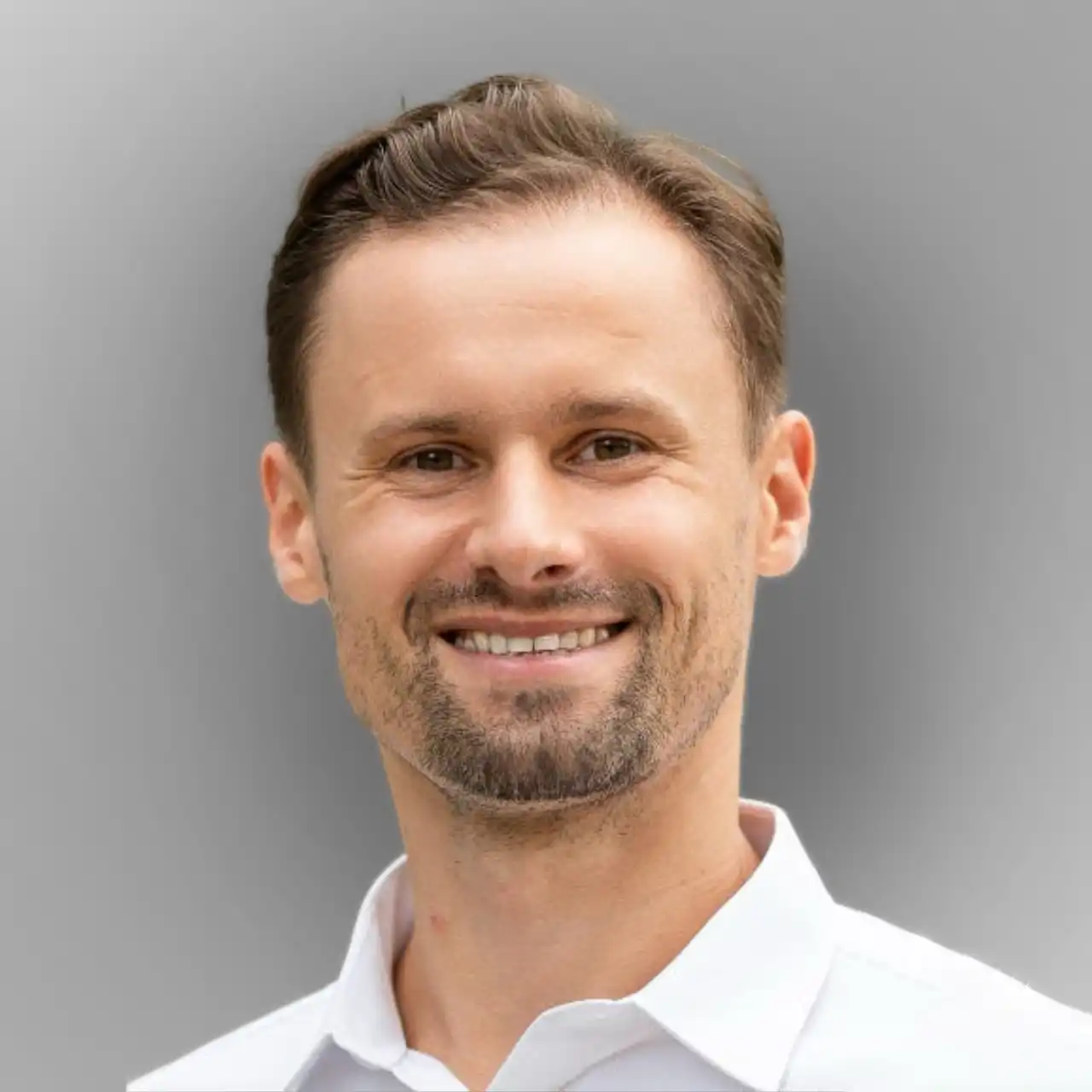
Anton Golub is a Founding Member of RWALabs.ae, the UAE's real-world asset tokenization services provider. He is a serial blockchain founder and former quantitative researcher, and advises asset owners and institutions on tokenization structuring, market design and cryptoeconomics. LinkedIn · rwalabs.ae
Reviewed by Irina Heaver, Founding Member of RWALabs.ae and Founder of NeosLegal, the UAE's first crypto-native law firm. Irina is ranked by Lexology as the UAE's recommended blockchain lawyer, contributes to the Chambers and Partners Virtual Assets Practice Guide, and is a Forbes Digital Assets contributor. She has practised law in the UAE since 2008 and has structured 300+ Web3 and virtual asset projects.
Disclaimer: This article is for general informational purposes only and does not constitute legal advice. Regulatory frameworks evolve; verify current requirements with qualified counsel before acting.